28111 South Firethorne Rd, #705, katy, Texas 77494

Treatment PathWay
At Novus Vos Skills LLC, treatment recommendations are individualized based on emotional wellness, current symptoms, recovery stability, level of functioning, and overall support needs. Following the assessment process, clients are recommended a treatment pathway designed to provide the appropriate level of therapeutic support, consistency, and care coordination.
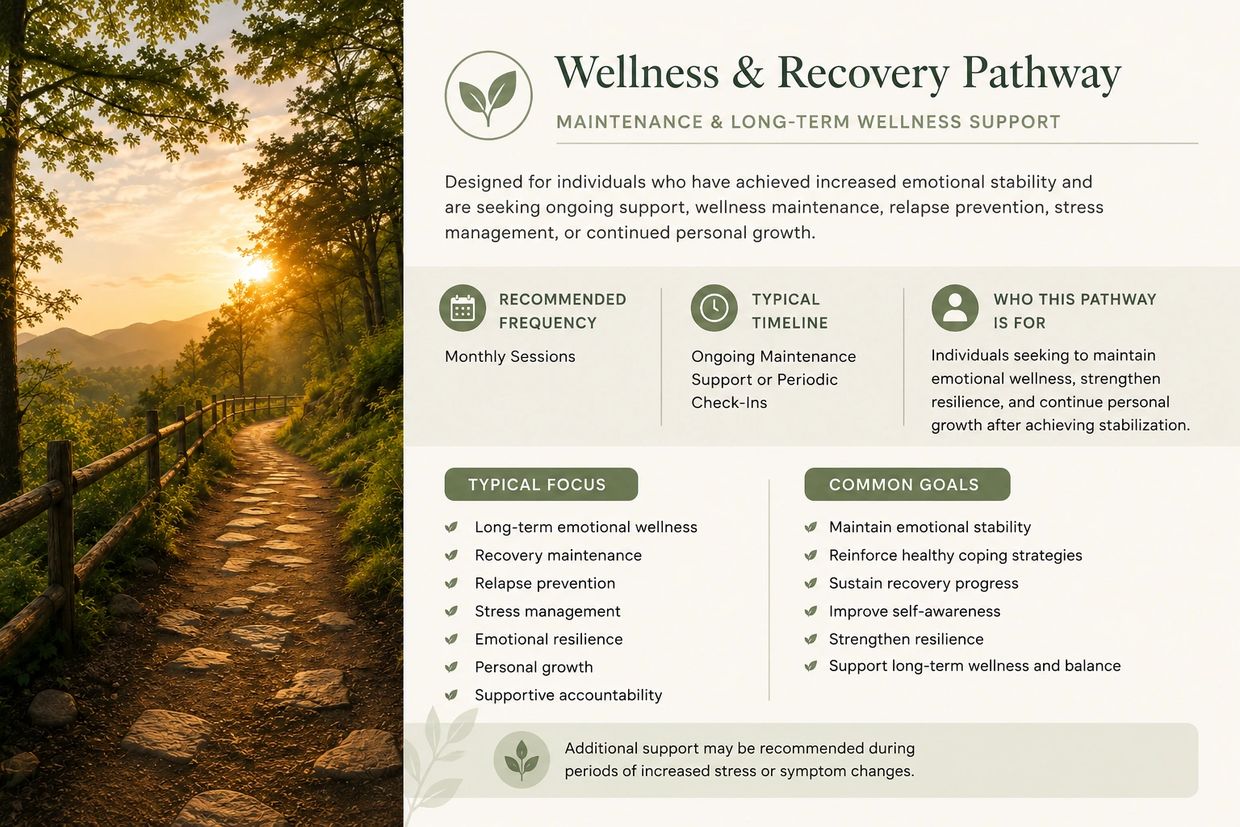
Wellness & Recovery Pathway (Maintenance)
Designed for individuals seeking ongoing emotional wellness support, recovery maintenance, stress management, relapse prevention, or continued personal growth after symptom stabilization.
Clients within this pathway are generally stable in daily functioning and benefit from periodic therapeutic support to maintain progress and reinforce healthy coping strategies.
Typical Treatment Duration
Ongoing Maintenance Support or Periodic Check-Ins
Common Goals
- Maintain emotional stability
- Reinforce healthy coping strategies
- Support long-term recovery and wellness
- Reduce risk of relapse or symptom recurrence
- Promote continued personal growth
Recommended Frequency: Monthly Sessions
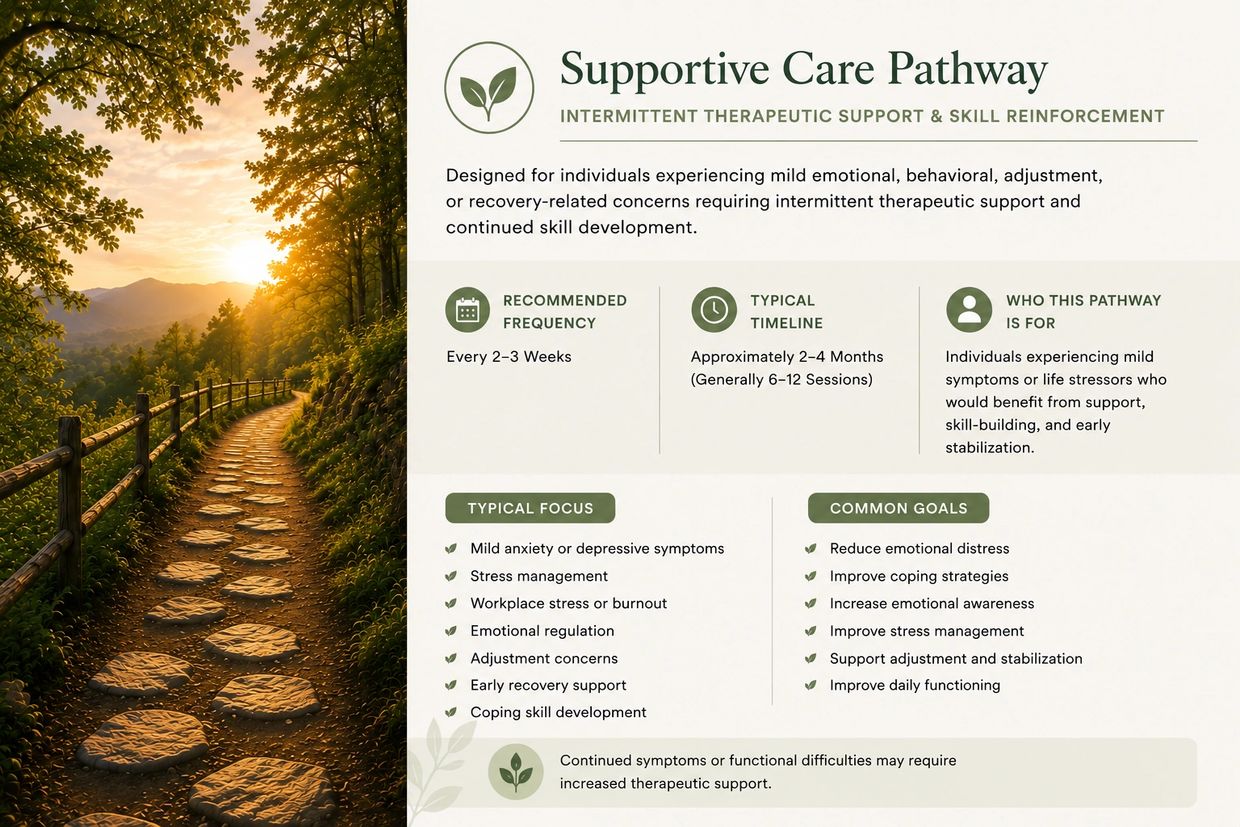
Supportive Care Pathway
Designed for individuals experiencing mild emotional, behavioral, adjustment, or recovery-related concerns that may intermittently impact daily functioning, relationships, work, or stress management.
This pathway focuses on strengthening coping skills, improving emotional regulation, and providing supportive therapeutic intervention while maintaining overall stability.
Typical Treatment Duration
Approximately 2–4 Months
(Generally 6–12 Sessions)
Typical Focus
- Mild anxiety or depressive symptoms
- Stress management
- Workplace stress or burnout
- Emotional regulation
- Adjustment concerns
- Early recovery support
- Coping skill development
Common Goals
- Reduce emotional distress
- Improve coping strategies
- Increase emotional awareness
- Improve stress management
- Support adjustment and stabilization
- Improve daily functioning
Recommended Frequency:
Bi-Weekly or Every 3 Weeks
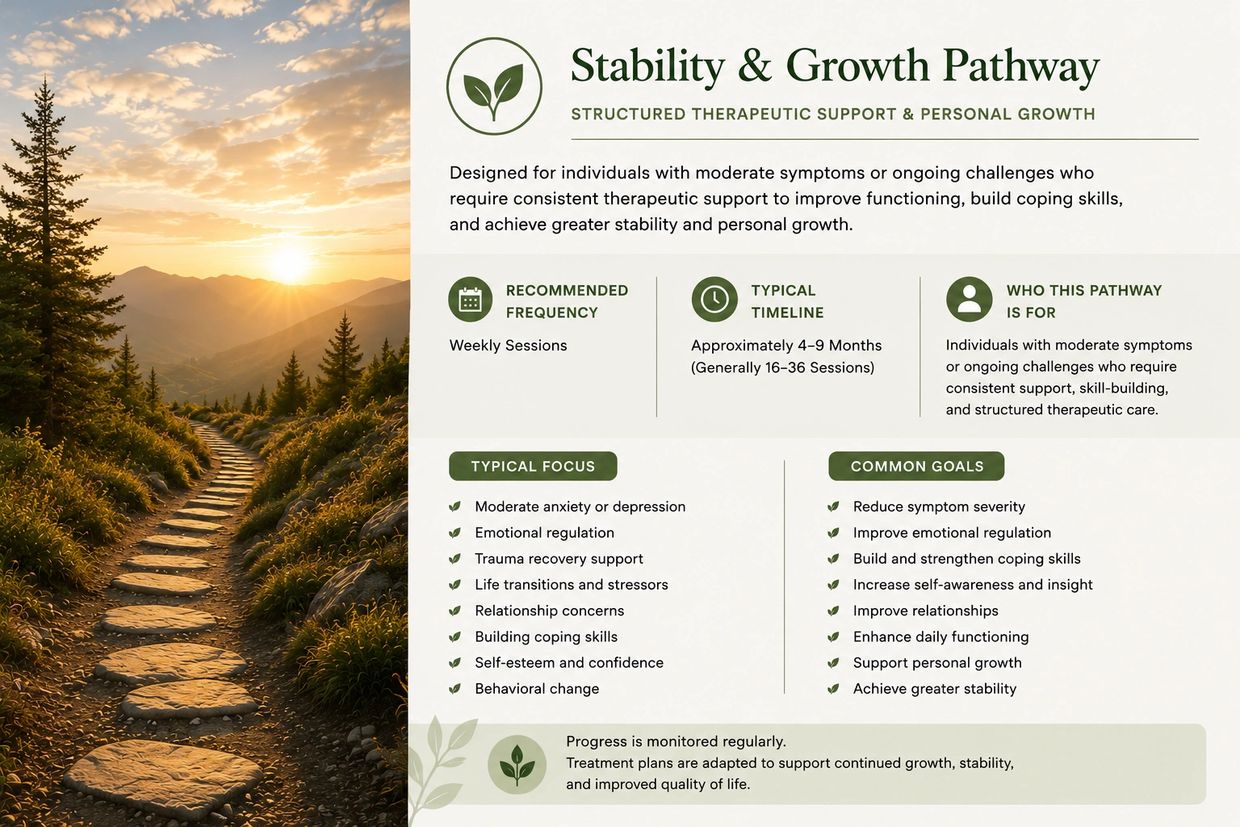
Stability & Growth Pathway
Designed for individuals experiencing persistent emotional or behavioral health concerns that are actively impacting daily functioning, relationships, occupational performance, academic responsibilities, or overall quality of life.
Clients within this pathway benefit from consistent therapeutic support, skill development, emotional stabilization, and collaborative treatment planning to support continued progress and long-term wellness.
Typical Treatment Duration
Approximately 4–9 Months
(Generally 16–36 Sessions)
Typical Focus
- Moderate anxiety or depression
- Trauma-related concerns
- Emotional dysregulation
- Functional impairment
- Relationship difficulties
- Burnout and overwhelm
- Recovery stabilization
- Coping skill development
Common Goals
- Improve emotional regulation
- Reduce symptom severity
- Improve functioning and consistency
- Strengthen coping skills
- Increase emotional stability
- Improve relationships and communication
- Support recovery and long-term growth
Recommended Frequency:
Weekly Therapy Sessions
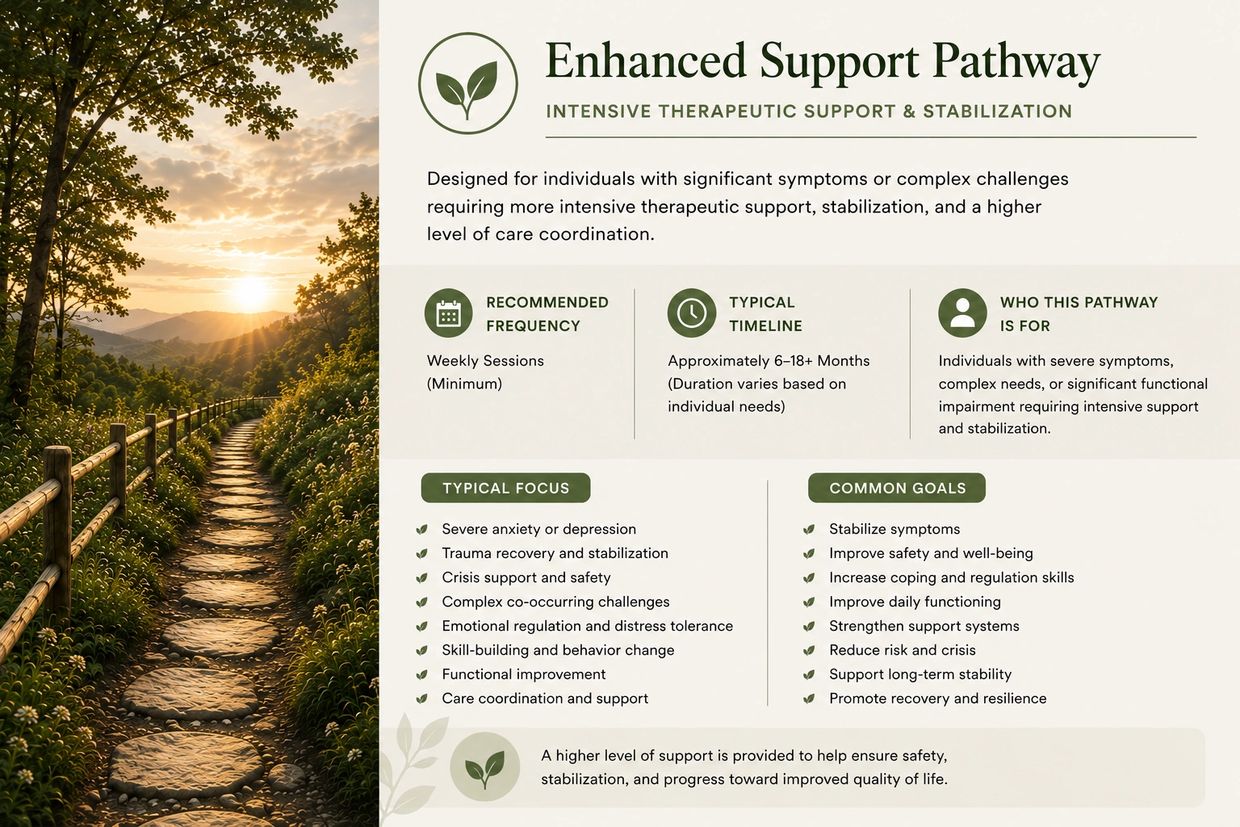
Enhanced Support Pathway
Designed for individuals experiencing elevated emotional distress, increased recovery concerns, significant life stressors, or greater difficulty maintaining emotional and behavioral stability independently.
This pathway provides increased therapeutic structure, stabilization support, clinical monitoring, and collaborative treatment planning to assist individuals requiring more consistent outpatient care.
Typical Treatment Duration
Approximately 6–18+ Months
Typical Focus
- Severe anxiety or depressive symptoms
- Significant emotional instability
- Trauma-related distress
- Functional decline
- Crisis-related concerns
- Increased recovery instability
- High psychosocial stress
- Ongoing stabilization support
Common Goals
- Improve emotional stabilization
- Reduce crisis-related symptoms
- Improve daily functioning
- Increase safety and support
- Strengthen coping and resilience
- Reduce symptom escalation
- Improve consistency in treatment participation
- Support transition toward lower levels of care when clinically appropriate
Recommended Frequency:
Weekly Therapy Sessions Minimum
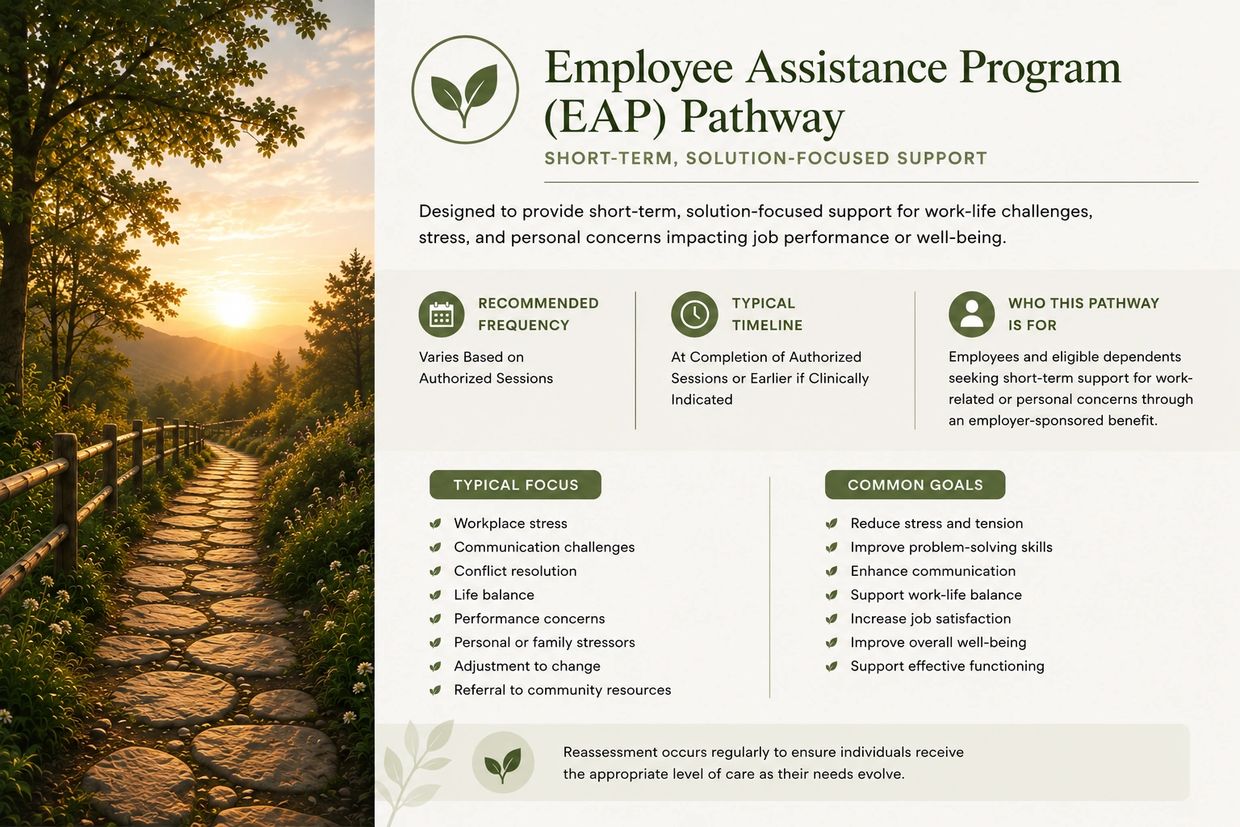
Employee Assistance Program (EAP) Pathway
Brief, solution-focused counseling services designed to support emotional wellness, workplace stress, adjustment concerns, life transitions, relationship difficulties, and recovery-related needs through employer-sponsored benefits.
Treatment recommendations within EAP services are individualized based on presenting concerns, clinical needs, and authorization limitations.
Typical Treatment Duration
1–16 Sessions